


Over the past four years, we have successfully grown the Ahrefs blog from ~5,000 to ~418,000 search visits per month.

How did we do it?
Essentially, we figured out how to create content that ranks on Google by blending good SEO principles with copywriting principles.
Now, we can’t attribute all our growth solely to our copywriting. But it is part of the explanation for this growth.
In today’s post, I’ll share some SEO copywriting tips that we’ve implemented in our content creation process.
- Match the three Cs of search intent
- Create quality content by analyzing top-ranking pages
- Build “linking triggers” in your content
- Use the ASMR formula to make your content easy to consume
- Pull readers into your page with the PAS formula
- Improve the reading experience with a table of contents
- Boost your CTR with these three title tag “hacks”
- Write like Hemingway
- Improve user engagement with the “Inverted Pyramid” method
- Add “open loops”
- Write content in your readers’ language
- Use CTAs to move readers down your marketing funnel
Before applying these tips, here are some basics you need to know.
What is SEO copywriting?
SEO copywriting is the process of creating online content that ranks high on Google, drives qualified traffic to your page, engages readers, and ultimately persuades them to take action.
After all, content that receives tons of traffic from Google but never contributes to your business growth goals is useless. This is similar to content that constantly converts but never gets any traffic.
So how do you create content that achieves these goals?
Here are some tips:
Match the three Cs of search intent
With 50,000 monthly searches in the US, the term “basketball shoes” seems like a great keyword to use when writing a blog post if you own a basketball blog.
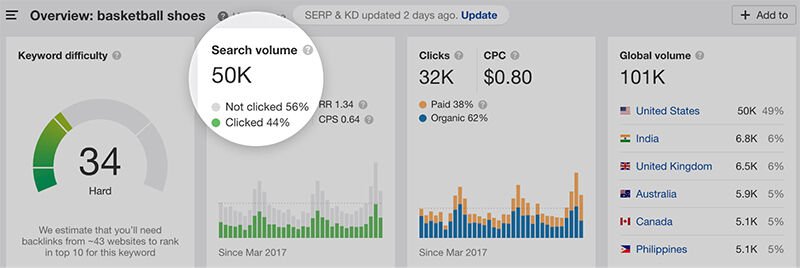
But you’d be wrong!
Why? Take a look at the search results for “basketball shoes.”
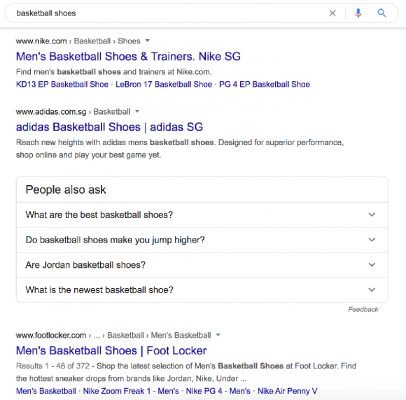
You can see that all the top-ranking pages are e-commerce category pages.
They come from retailers and list relevant products they sell.
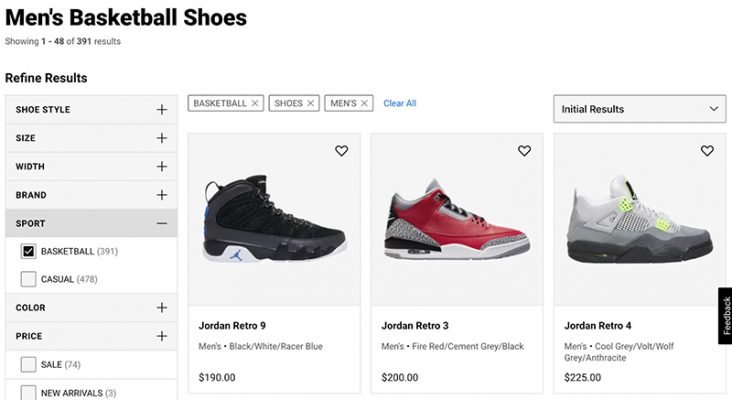
Google won’t automatically rank blog posts for this query because it knows searchers are in buying mode, not learning mode.
And this is the first lesson in SEO copywriting: create the right type of content for the keyword you’re targeting. If you don’t do this, ranking your website will be an uphill battle.
This concept is called search intent.
Understanding search intent is quite simple. Just look at the search results to figure out what the 3 Cs of search intent are.
Content type
Content types almost always fall into one of five categories: blog posts, products, categories, landing pages, or videos.
For example, search results for “wireless earbuds” will all show e-commerce sales pages, but if you search for “best wireless earbuds,” the results will be blog posts.

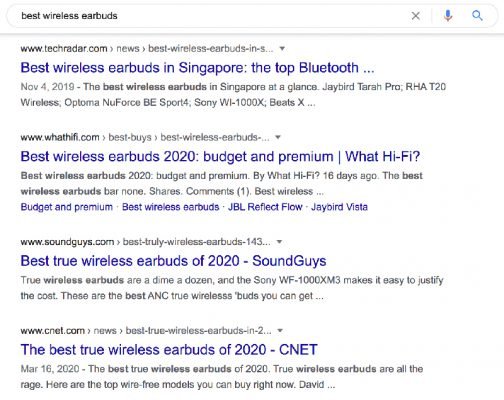
Content format
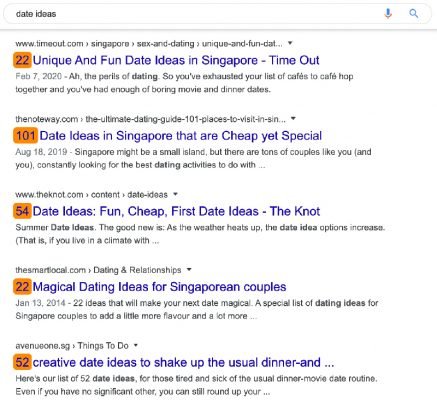
Content format applies mainly to informational content. Example formats include how-tos, listicles, news articles, opinions, and reviews.
For example, when you search Google for “date ideas,” you’ll see that they are all lists like:
Content angle
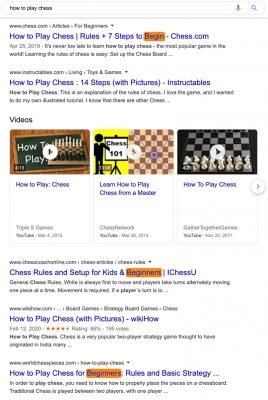
The content angle is the main selling point that drives the page. This usually dominates the search results.
For example, the top results for “how to play chess” are usually targeted at beginners:
Create quality content by analyzing top-ranking pages
Google wants to rank the most useful or relevant results on the first page. So your article should show that it deserves a spot there.
How can you achieve this?
By covering all the information or keywords that searchers want to know and expect to see.
For example, let’s assume you want to rank for the query “best wireless earbuds.”
It’s clear from looking at the SERPs that the post should be in list format. But which products, features, and subtopics should you mention?
The easiest way to find out is to look for common information among the top-ranking results.
For example, if you look at the top results for “best wireless earbuds,” you can see that, as you might expect, they all mention Apple AirPods Pro.

So that’s definitely a product you need to mention in your article.
Additionally, you should also mention other products on the page like:
- Jabra Elite Active 75t;
- Samsung Galaxy Buds Plus;
- Beats Powerbeats Pro.
This will improve your page’s content utility for searchers and potentially increase your article’s relevance in Google’s eyes.
If you want to take your article ideas further for web users, analyze the content gap to see what queries the top-ranking pages are using. To do this, simply paste a few top-ranking URLs into Ahrefs’ Content Gap tool:
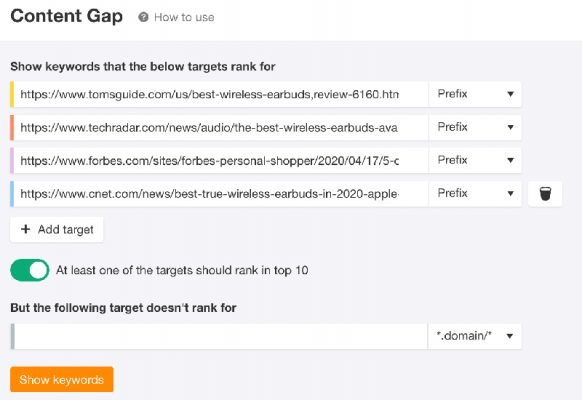
Then click “Show keywords.”
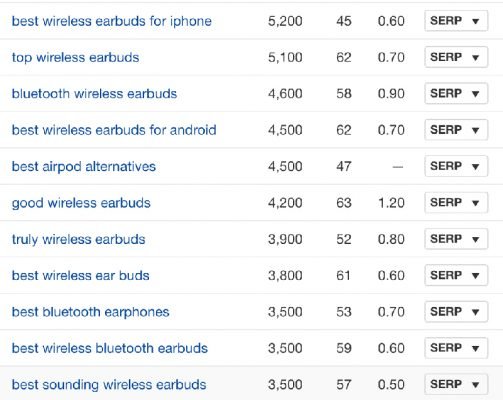
Using this tool can help you better understand what people want to know when they perform a search query.
In this case, we see things like:
- best wireless earbuds for iPhone;
- best wireless earbuds for Android;
- best AirPods alternatives;
- best wireless earbuds
You can even use these ideas to create outlines for your new articles to improve search quality.
Build a “linking trigger” system in your articles
Google says that links are one of their top three ranking factors. That’s probably why there’s a clear correlation between links and organic traffic.
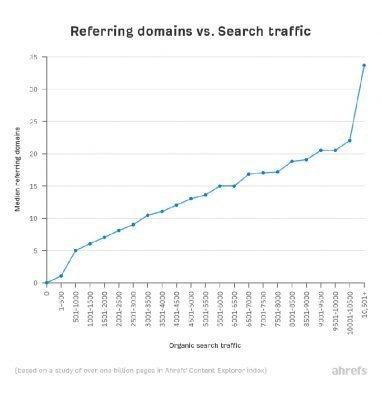
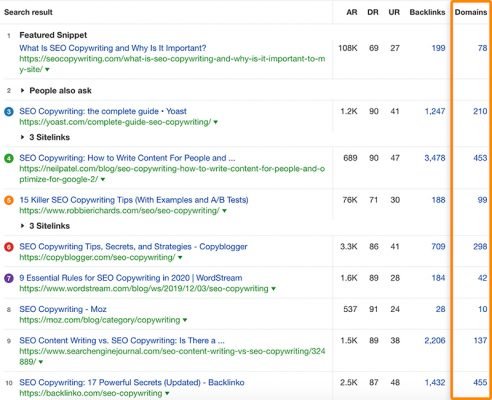
So when building content for your articles, you should try to analyze why people choose to link to the pages you want to beat and then apply the same things to your posts.
For example, in this post, we targeted the keyword “SEO copywriting.”
If we look at the SERP overview report in Keywords Explorer, we’ll see that competition is fierce. On average, the top ten results have backlinks from 198 different websites.
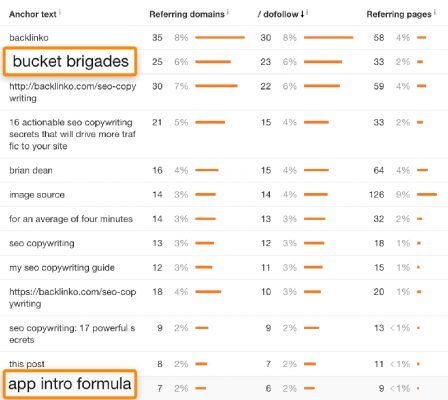
But why do so many users choose to link to these pages?
To find out, take one of the URLs listed in the image, paste it into Site Explorer and check the “Anchors” report. This will show you the most common words they use when linking to the page.
Immediately, we see that a lot of people are linking to this post because of two concepts the article introduces: “bucket brigades” and “APP intro formula.”

Improve the reading experience with a table of contents
A reader will consider their time valuable.
Whether consciously or subconsciously, they’re always checking whether the content they’re reading is delivering on its promise. If the article says it has the answer to their question, they’ll look to verify if that’s true. If not, they’ll leave immediately.
And this is why you should add a table of contents to your articles.

This allows your readers to immediately understand whether your post is likely to answer their question. And if so, they can easily navigate to the section they want to see.
Once they start reading, they may get hooked on your page content and begin reading the rest more naturally.
At Ahrefs, we always keep the table of contents descriptive but not too dense:
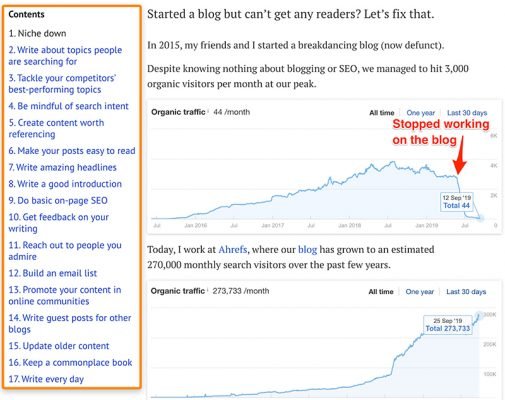
Another added benefit of a table of contents is that it creates anchors on the page, which Google sometimes displays in SERPs:

This creates more opportunities to increase click-through rates.
Boost your CTR with these three title tag hacks
Even if your page ranks number 1, it’s meaningless if no one clicks on your page.
This is why you need to write a compelling title tag. Its job is to attract clicks to your page.
How do you improve your title tag quality?
Try using these three hacks!
Add power words
Remarkable. Captivating. Noteworthy.
These are power words: words that can trigger positive or negative emotional responses in people.
Including one or two of these words in your title tag can make it much more appealing.
For example, by adding an emphasis word, you can turn a simple title tag like this:

Into a title with content like this:

Looks much better, doesn’t it?
If you’re looking for a list of power words to choose from for your titles, here’s an excellent list.
Add parentheses
You can use parentheses to reinforce your title tag as a way of “adding icing to the cake.”
For example, it would be even more appealing if your article about “Benefits of Running” was backed by science:

Add the year to your title
Some queries demand the freshest results.
For example, if you’re targeting a keyword like “best wireless earbuds,” searchers will want to see results updated for the current year.
To convey the freshness of your product to visitors, add the year in your title, like this:

PRO TIP
To get more traffic without writing new content, find pages on your website that are ranking on the first page of Google and improve their title tags.
You can find these pages using Google Search Console (GSC) or Ahrefs’ Site Explorer.
For GSC, read this guide. For Site Explorer, enter your domain and you’ll be taken to a report of non-paid keywords so you can see all the keywords you need to rank for, then filter to rank those keywords on pages at positions #2 – #5.
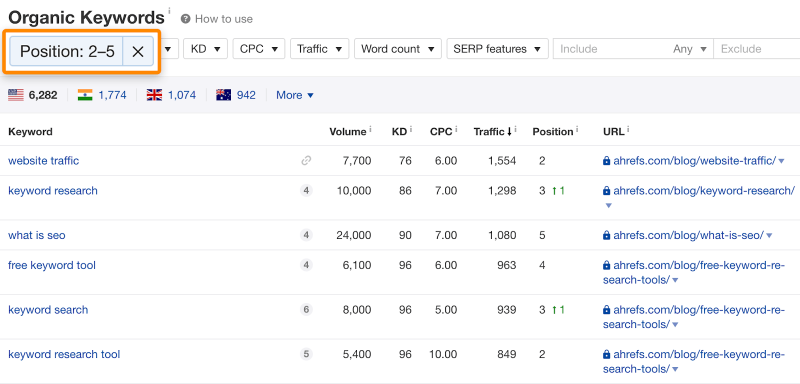
Then use one of the hacks above to improve your title tag.
Write like Hemingway
Statistics show that 50% of the US population reads below an 8th-grade level.
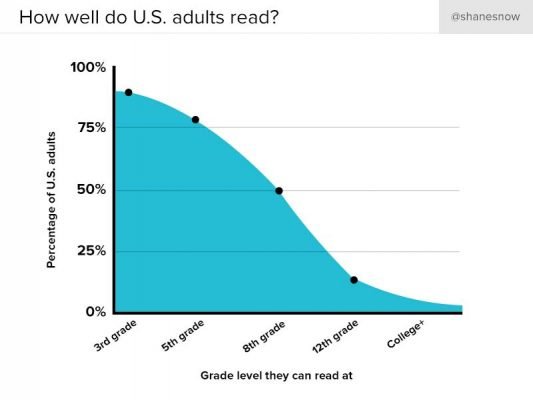
If you try to use complex language in your articles, you could lose half of your readers. That means they won’t share your page, link to it, or convert in any way.
Instead, follow what American novelist Ernest Hemingway became famous for: simple words and sentences, uncomplicated syntax, and tight prose structure.
To simplify your writing, you can use Hemingway, a tool inspired by the writer himself:
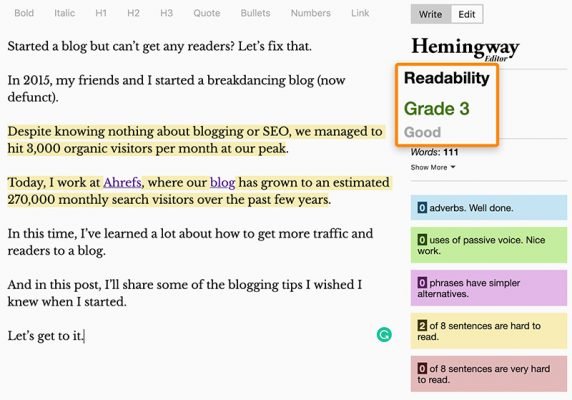
Remember: your goal is to communicate with readers, not to impress them with your rich vocabulary.
Improve page traffic with the “Inverted Pyramid” method
Most pages seem to have a tendency to bury important information.
Just look at the keyword list for the best non-stick pan:
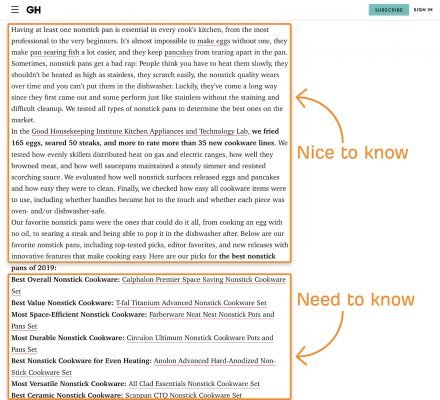
The 289 “words to know” list above mentions basic information before delivering what the reader is looking for: the answer to their question.
Now take a look at The Wirecutter’s post on the same topic:
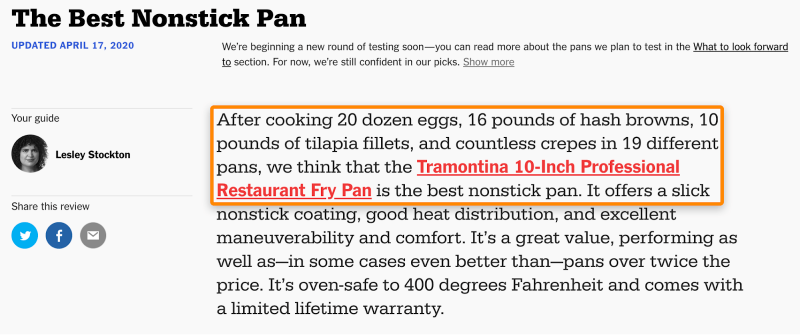
This time, the answer is right in the first paragraph, just 32 words in.
For impatient readers, this is perfect. They get what they want immediately. For the rest who prefer context or more details, there’s plenty to read below.
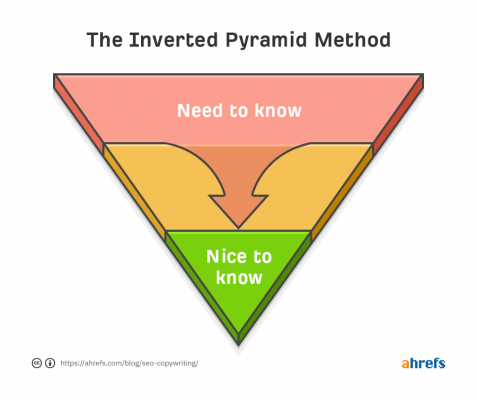
This format is called the inverted pyramid. It’s a journalism technique where you give people the essential information before presenting non-essential information.
Add “open loops” to your page
Have you ever watched the first episode of a TV series, and before you knew it, you had watched everything?
For years, TV producers and screenwriters have been using a method to keep you hooked on their shows. This technique is called “open loops” (also known as cliffhangers).
Basically, they’ll set up a key element in the previous episode to make you curious. Then they’ll deliberately not resolve this issue until sometime later. This might be addressed a few episodes later, or in the first episode of the next season.
Here’s an example. [By the way, spoiler alert!]
In the TV show Sherlock, Moriarty’s plan successfully ruined Sherlock Holmes’ reputation. And that drove Sherlock to commit suicide.
As a viewer, you’d be shocked, right? Isn’t Sherlock the main character? How can he die? Then suddenly, the episode ends. So does the season.
This makes you want more. You crave a good ending for the show. You’ll wait desperately for the new episode, and you’ll watch it immediately when it’s finally released (which, by the way, was two years later).
Clever, right?
Now, you can also apply this technique to your own content. For example, in our content section post, Josh said that Zapier’s post about remote work was built strategically to attract more traffic, links, and authority.

But he doesn’t tell you why or how right away. You have to keep reading to find out more.
Of course, Josh eventually explains the benefits and how to do this:
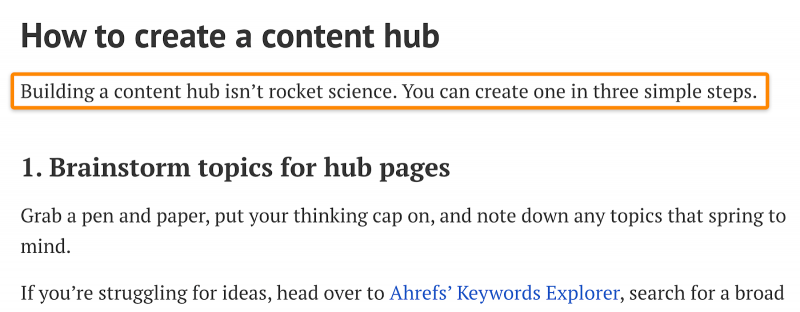
Remember: you must always close the loop. Otherwise, it will destroy the trust your readers have in you.
NOTE: Let me close the loop for you. It turns out: Sherlock only faked his death.
Write in your audience’s language
To persuade your audience and compel them to click and read your articles, you need to show them you understand them. You need to show them you’re one of them. You need to write in their language.
For example, if you’re writing a blog post targeting b-boys and b-girls, you’ll need to understand that the term “breakdance” is incorrect. In fact, in the dance community, it’s seen as an insult.
The correct terms are “breaking” or “b-boying/b-girling.”
And if you don’t use these terms correctly, it will be immediately obvious to readers that you don’t share their understanding, and they’ll close the article right away.
Additionally, there’s also an SEO benefit here.
Through co-occurrence and “phrase-based indexing,” you can even improve your keyword rankings. Basically, this is the idea that helps Google better determine content relevance through the appearance of words and phrases in the article (e.g., a page mentioning Apple, Face ID, and phone is clearly about the iPhone).
So how can you ensure that your target audience understands the language you’re trying to convey?
If you’re familiar with the niche, you won’t have any problems. If not, you’ll need to research the communities where your target audience hangs out.
These could be places like:
- Facebook groups;
- Reddit;
- Slack communities;
- Quora;
- Blogs;
- Forums;
- And more.
Take time to explore these communities. Research the exact terms they use. In the process, look at the topics they discuss. This can make your blog post ideas better quality.
For example, if I were starting a billiards blog, I would go to r/snooker.
With just a few minutes of browsing, I was able to see the terms I would need to learn like potting, break, century, maximum break, etc. I also learned some famous player names like Ronnie O’Sullivan, John Higgins, Stephen Hendry, Jimmy White, etc.
I even discovered a very promising topic I could write about:

That’s a great result for just a few minutes of effort.
Use CTAs to move readers down your marketing funnel
If you want your readers to take the next step, you have to tell them what to do. As the saying goes, “if you don’t ask, you don’t get.”
In marketing, this means adding calls to action (CTAs) to your content.
But that doesn’t mean every call to action will lead to customers buying your product. Not every reader is ready to buy.
It depends on their buying intent.
Here’s an example to illustrate:
Imagine you sell VPN subscriptions. You’ve created an article about “What is a VPN.” It ranks well on Google and receives a lot of search traffic.
But since this is a beginner-level topic, your readers probably won’t buy there or later. After all, they just learned what a VPN is. They’re not ready to spend money on something they just learned about.
So instead of trying to convert them into customers, try to pull them into the next stage of your marketing funnel.
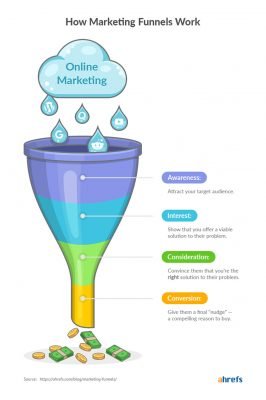
For example, in your VPN article, you might explain how VPNs work. At this point, your readers might wonder if they need one for themselves. So if you have an article about “10 reasons why everyone needs a VPN subscription,” you could insert an internal link to that product right in the article instead.
That way, your readers will be one step closer to converting.
This is good from a copywriting perspective because you’re likely to improve conversion rates and ROI for your content. It’s helpful from an SEO perspective because it increases page views, reduces bounce rates, and may send positive engagement signals to Google.
Note: always match the appropriate call to action with the appropriate stage in the customer’s conversion journey.


